

Meta Description: Master the machine dip exercise with our comprehensive guide. Learn step-by-step proper form, muscles worked, chest vs. triceps setup, common mistakes, and sample workout routines.
If you have ever stepped into a gym looking to build serious upper-body push strength, chances are you have eyed the dip station. Standard bodyweight dips are often dubbed the “upper-body squat” because of how effectively they build the triceps, chest, and front deltoids. However, for lifters recovering from joint discomfort, beginners building baseline strength, or advanced lifters looking to isolate muscle groups without struggling for balance, bodyweight dips can be harsh on the shoulders and sternum.
That is where the Machine Dip comes in.
Whether you are using a seated dip machine or an assisted dip machine, this exercise gives you all the mechanical advantages of compound pressing with controlled stability, customizable loading, and targeted hypertrophy.
In this complete guide, we will break down everything you need to know about machine dips: anatomy, setup, step-by-step form, common pitfalls, and how to program them into your routine for maximum growth.
What is a Machine Dip?
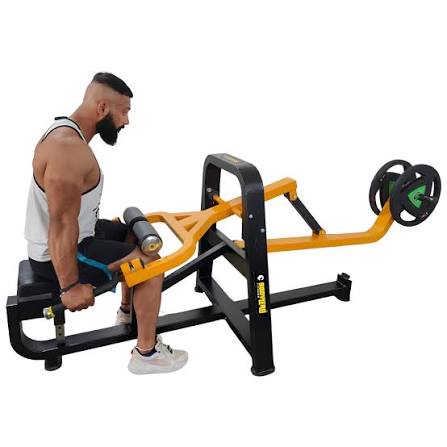
The machine dip is a guided resistance movement designed to replicate the dipping motion—extending the elbows and depressing the shoulder girdle against resistance. Unlike bodyweight dips, where your torso moves through free space, machine dips isolate the pressing movement pattern within a fixed or guided track.
There are two primary types of dip machines in modern commercial gyms:
- Seated Machine Dip (Plate-Loaded or Selectorized): You sit upright on a padded seat, secure your thighs under a pad, grip two handles at your sides, and press down.
- Assisted Dip Machine (Counterweight System): You stand or kneel on a padded platform attached to a weight stack. Here, selecting more weight actually makes the exercise easier by counterbalancing a portion of your body weight.
Both variations reduce the stabilization demand on your rotator cuff and core, allowing you to focus pure mechanical tension onto the target muscles.
Anatomy Breakdown: Muscles Worked in Machine Dips
Understanding which muscles are involved helps you mindfully recruit the right motor units during every rep.
- Triceps Brachii: The primary muscle targeted during a neutral, upright machine dip. All three heads (lateral, medial, and long head) contract hard to extend the elbow joint.
- Pectoralis Major (Lower Chest): When you lean slightly forward, the lower muscle fibers of the chest engage heavily to assist in depressing the humerus.
- Anterior Deltoids: The front head of the shoulder works in tandem with the chest and triceps to push the handles downward.
- Core and Forearms: While stabilization needs are reduced compared to free dips, your grip and core muscles remain active to keep your spine neutral and prevent sliding.
How to Perform the Seated Machine Dip with Perfect Form
Executing the machine dip correctly is crucial for maximizing hypertrophy while protecting your elbow tendons and anterior shoulder capsule. Follow this step-by-step checklist on your next leg-and-push day.

Perfect Execution Steps1.Machine Setup & Seat Height:Step 1.
Adjust the seat height so that when you sit down, the machine handles sit directly at lower-chest level. If the seat is too low, your shoulders will start in excessive extension, putting stress on your shoulder joints. Fasten or adjust the thigh pad securely to hold your torso in place.2.Grip and Shoulder Positioning:Step 2.
Grip the handles firmly with a neutral wrist (wrists stacked over your forearms, not bent backward). Roll your shoulders down and back, depressing your shoulder blades (scapulae). Keep your chest elevated and puffed up slightly throughout the entire set.3.The Concentric Phase (Pressing Down):Step 3.
Take a deep breath into your core. Exhale smoothly as you drive the handles straight down toward your hips. Focus on pushing through the palms of your hands and squeezing your triceps hard at the bottom lockout without rounding your shoulders forward.4.The Eccentric Phase (Controlled Return):Step 4.
Inhale as you slowly control the handles on the way back up over a 2 to 3-second tempo. Stop when your elbows reach roughly a 90-degree angle (or when your hands reach lower-rib height). Avoid letting the weight stack slam or letting your shoulders shrug upward.
Chest Focus vs. Triceps Focus: How to Tweak Your Setup
Depending on your aesthetic goals, you can shift the primary mechanical tension of the machine dip toward either your triceps or your lower chest simply by adjusting your torso angle and grip.
1. Triceps-Dominant Setup
- Torso Position: Completely upright, back pressed firmly against the seat backrest (if available).
- Elbow Angle: Keep elbows tucked in close to your ribs throughout the range of motion.
- Grip: Narrower grip width.
- Mental Cue: “Push straight down through your elbows and lock out the arms.”
2. Lower-Chest-Dominant Setup
- Torso Position: Lean your torso slightly forward (roughly 15 to 30 degrees) while keeping your spine straight.
- Elbow Angle: Allow elbows to flare out slightly sideways (around 45 degrees from your torso).
- Grip: Slightly wider grip position.
- Mental Cue: “Bring your armpits down and squeeze your lower chest together.”
5 Common Machine Dip Mistakes (And How to Fix Them)
Even though machine dips provide a safe, guided movement path, poor habits can still reduce gains and cause joint irritation.
Warning: Shrugging your shoulders at the top or letting your elbows flare wide under heavy loads shifts tension away from your muscles and places shear stress onto the acromioclavicular (AC) joint and shoulder capsule.
1. Excessive Elbow Flare
- The Mistake: Flaring elbows out to 90 degrees relative to your torso.
- The Fix: Angle your elbows roughly 30 to 45 degrees relative to your body. Think about pointing your elbows toward the rear wall, not the side walls.
2. Going Too Deep
- The Mistake: Letting the handles rise far above rib level, forcing the humerus into extreme hyperextension.
- The Fix: Stop the ascending phase once your elbows hit a 90-degree bend. More depth is not better if it forces your shoulder heads to roll forward.
3. Bending Wrists Backward
- The Mistake: Allowing the weight of the handles to collapse your wrists back toward your forearms.
- The Fix: Keep your wrists straight and stacked over your radius and ulna. Apply force directly through the heel of your palm.
4. Shrugging the Shoulders
- The Mistake: Allowing your shoulders to rise up toward your ears at the top of the rep.
- The Fix: Actively pull your shoulder blades down into your back pockets before starting your set and maintain that depression throughout.
5. Using Momentum
- The Mistake: Jerking the handles down or letting the weight stack bounce at the top.
- The Fix: Use a controlled 2-second press and a 3-second negative. Time under tension is what drives muscle growth.
Machine Dips vs. Free Dips vs. Bench Dips
Not sure which dip variation belongs in your current training program? Here is how machine dips stack up against the alternatives:
| Feature | Seated Machine Dip | Bodyweight / Free Dip | Bench Dip |
| Primary Muscle Focus | Triceps / Lower Chest | Chest / Triceps / Front Delts | Triceps |
| Stability Required | Low (Guided path) | High (Requires full core/rotator control) | Medium |
| Progressive Overload | Extremely easy (Pin/Plate loaded) | Requires dip belt/weighted vest | Requires plates on lap |
| Shoulder Safety | High (Controlled mechanics) | Moderate to Low (Depends on mobility) | Low (Risky anterior shoulder placement) |
| Suitability for Beginners | Excellent | Advanced | Beginner to Intermediate |
| Fatigue Factor | Low axial fatigue | High systemic fatigue | Low systemic fatigue |
Strategic Programming: Sets, Reps, and Routines
Because machine dips allow for precise weight adjustments, they are extremely versatile. You can use them as a primary compound movement on a push day or as a high-rep finisher at the end of an upper-body workout.
Hypertrophy (Muscle Growth)
- Goal: Maximize mechanical tension in the triceps and chest.
- Sets & Reps: 3 to 4 sets of 8 to 12 reps.
- Rest Interval: 90 to 120 seconds.
- Intensity: Leave 1 to 2 reps in reserve (RIR 1-2) on early sets, taking the final set near technical failure.
Strength & Overload
- Goal: Drive heavy load through elbow extension without shoulder fatigue.
- Sets & Reps: 4 sets of 6 to 8 reps.
- Rest Interval: 2 to 3 minutes.
- Intensity: Heavy weight, explosive concentric phase, controlled negative.
Endurance & Pump Finisher
- Goal: Maximize metabolic stress and blood flow.
- Sets & Reps: 3 sets of 15 to 20 reps (or a drop-set).
- Rest Interval: 45 to 60 seconds.
Sample Push Day Workout Featuring Machine Dips
Here is an effective Push Day workout routine designed for balanced chest, shoulder, and triceps development:
- Incline Dumbbell Press: 3 sets × 6–8 reps (Primary heavy press)
- Seated Machine Dip (Chest-leaning style): 3 sets × 8–10 reps (Compound secondary press)
- Standing Cable Lateral Raises: 4 sets × 12–15 reps (Side delts)
- Triceps Overhead Cable Extension: 3 sets × 10–12 reps (Triceps long head focus)
- Seated Machine Dip (Triceps-upright style finisher): 2 sets × 15–20 reps (Burnout)
Frequently Asked Questions (FAQs)
Are machine dips as good as regular bodyweight dips?
Yes! While regular bodyweight dips require more stabilizing muscles and core engagement, machine dips excel at muscle isolation and mechanical tension. They allow you to train closer to true muscle failure without your balance giving out first.
Why do my shoulders hurt during dips?
Shoulder discomfort during dips usually stems from three issues: dipping too deep (past a 90-degree elbow bend), letting your shoulders shrug upward, or flaring your elbows outward. Adjusting seat height and keeping your shoulders packed down usually resolves shoulder strain.
Can beginners do machine dips?
Absolutely. The seated dip machine is one of the safest pressing exercises for beginners because it eliminates the challenge of supporting your full body weight while teaching proper pressing mechanics.
Final Thoughts
The Machine Dip is one of the most effective, underutilized exercise variations in modern resistance training. By reducing stabilization demands and providing smooth, customizable loading, it lets you target your triceps and lower chest with hyper-focused tension while protecting your shoulder joints.
Add machine dips to your upper-body or push workouts using the setup techniques outlined above, track your progressive overload over time, and watch your pressing strength and arm development skyrocket!
#30HashTags #MachineDips #TricepsWorkout #ChestWorkout #UpperBodyWorkout #GymMotivation #Bodybuilding #StrengthTraining #FitnessGoals #TricepsDay #PushDay #GymLife #FitFam #WorkoutRoutine #Hypertrophy #MuscleBuilding #ArmDay #GymTips #ExerciseTips #FitnessCommunity #WeightLifting #PersonalTrainer #HomeGym #GymEquipment #FitnessJourney #WorkoutMotivation #Powerlifting #FitnessAddict #GymTime #MuscleGain #TrainingDay
