
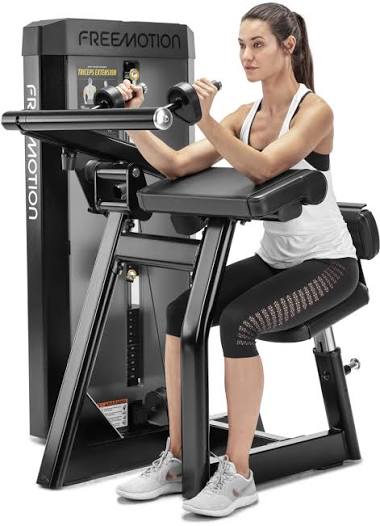

Meta Description: Unlock maximum arm growth with our comprehensive guide to the machine triceps extension. Learn deep anatomy, precise form cues, programming strategies, advanced intensity techniques, and pain-free execution.
When it comes to building impressive, powerful arms that command attention in and out of the gym, most people immediately think of bicep curls. But if you want upper arms that fill out your sleeves with density and three-dimensional pop, focusing on your biceps is only giving you a fraction of the equation.
The triceps brachii makes up roughly 60% of your total upper-arm volume. While heavy compound pushing movements like flat bench presses, overhead presses, and weighted dips lay a strong foundation of pressing power, they rarely isolate all three heads of the triceps through their complete, unobstructed range of motion.
That is precisely where the Machine Triceps Extension becomes an absolute game-changer in your training program.
Whether you are a beginner looking to build baseline strength without fumbling with balance, an intermediate lifter striving to carve out that coveted outer “horseshoe,” or an advanced bodybuilder looking to drive a muscle past total failure safely, the triceps extension machine is one of the most effective, joint-friendly isolation tools ever engineered.
In this deep-dive guide, we will break down the science of triceps growth, mechanics, setup variations, common mistakes, and exact routines to take your arm development to the next level.
Why the Machine Triceps Extension Deserves a Permanent Spot in Your Program
Free weights like barbells, EZ-bars, and dumbbells are fantastic, but they come with mechanical limitations—specifically regarding resistance curves and joint stress.
Here is why adding machine triceps extensions to your push or arm training days provides unique benefits:
1. Consistent Resistance Curve Across the Entire Movement
With free-weight skull crushers or overhead dumbbell extensions, resistance is heavily dictated by gravity. At the top lockout of a skull crusher, gravity pulls straight down through your stacked bones, meaning tension on the triceps drops off sharply right at the top.
Triceps extension machines use cam-and-pulley systems or plate-loaded lever arms engineered to keep constant, uninterrupted tension on the muscle belly from the absolute deepest stretch all the way to maximum contraction.
2. Elimination of Balance and Stability Bottlenecks
When performing free-weight triceps extensions, your shoulder stabilizers, core, and wrist flexors work overtime just to keep the weight from drifting off path. When fatigue sets in, form breaks down—shifting strain into your elbows and shoulders.
The fixed axis of rotation on a machine isolates the elbow joint, allowing 100% of your neural drive to go directly into contracting the triceps fibers.
3. Maximum Hypertrophy with Minimal Joint Stress
Elbow tendonitis (triceps tendinopathy) is one of the most common injuries among lifters. Free-weight extensions exert severe shear stress on the olecranon process at the bottom of the movement.
By locking your upper arms against a padded support ramp, the machine stabilizes the humerus, taking shear force off the elbow tendons and directing it into muscle tissue.
Anatomy Breakdown: The Three Heads of the Triceps Brachii
To maximize every single rep, you need to understand what is happening beneath the skin. The triceps brachii gets its name from having three distinct origin points (heads) that merge into a single tendon inserting into the olecranon process of the ulna.
- The Lateral Head: Positioned on the outer side of the arm, this head is primarily responsible for the striking “horseshoe” shape visible from the side. It works hardest during heavy, explosive extension movements.
- The Medial Head: Located deep in the lower portion of the upper arm, just above the elbow joint. While less visually dominant, it is the workhorse of the triceps—active in all pressing movements regardless of speed or weight.
How to Perform the Machine Triceps Extension with Flawless Technique
Executing this movement correctly requires matching your body’s natural joint mechanics to the machine’s axis of rotation. Follow this step-by-step master checklist.

Perfect Execution Steps1.Align the Axis of Rotation:Step 1.
Adjust the seat height so that when you sit down, your upper arms rest flush against the angled pad. Crucially, position your body so your elbow joints line up directly with the red pivot point (the axis of rotation) on the machine.2.Set Grip & Lock Shoulders Down:Step 2.
Grip the handles firmly with a neutral (palms facing inward) or pronated grip. Keep your wrists straight and rigid—never let them bend backward. Pack your shoulder blades down into your back pockets to keep your upper traps relaxed.3.The Concentric Drive (Extension):Step 3.
Inhale deep into your stomach, then exhale as you press the handles forward and down. Focus on pushing through the heels of your hands, fully extending your elbows until your triceps contract hard. Hold the lockout for one full second.4.The Eccentric Return (Controlled Stretch):Step 4.
Inhale as you slowly control the weight back over a 2 to 3-second negative. Allow the handles to return until your forearms form a 90 to 100-degree angle with your upper arms, getting a deep stretch in the triceps before starting the next rep.
5 Critical Technical Mistakes (And How to Fix Them)
Avoid these common execution errors to ensure your triceps get 100% of the stimulus while keeping your joints completely safe:
Critical Warning: Never let your elbows flare outward or lift off the support pad during the movement. Doing so instantly transfers the load from your triceps to your chest and front deltoids, increasing shear stress on the elbow joint.
1. Elbows Lifting Off the Support Pad
- The Error: Allowing your upper arms or elbows to rise off the pad during the eccentric phase to lift heavier weight.
- The Fix: Keep your arm glued flush to the padding from shoulder to elbow throughout the entire set. Lower the weight stack if necessary.
2. Bending and Breaking the Wrists
- The Error: Allowing the wrist joints to flex or extend backward under heavy load.
- The Fix: Treat your wrists as rigid, frozen hinges. Drive force straight through the base of your palms rather than your fingers.
3. Hunching and Shrugging the Shoulders
- The Error: Allowing your shoulders to creep up toward your ears as the set gets challenging.
- The Fix: Actively depress your scapulae before initiating your first repetition and hold them locked down throughout the set.
4. Cutting Range of Motion (Half-Reps)
- The Error: Stopping short of full lockout or failing to allow a deep bend at the top.
- The Fix: Work through a complete range: achieve a hard 1-second squeeze at full extension and a full stretch at the top of every rep.
5. Using Ego Weight and Bouncing
- The Error: Jerking the weight handles down using body momentum and letting the weight stack slam at the top.
- The Fix: Control the tempo. Use a smooth 1-second press down, a 1-second peak squeeze, and a controlled 3-second negative return.
Machine Extensions vs. Cable Pushdowns vs. Skull Crushers
Here is how the machine triceps extension stacks up against other popular isolation movements so you can decide where it fits in your weekly split:
| Feature | Machine Triceps Extension | Cable Rope Pushdown | Barbell Skull Crusher |
| Primary Target | All 3 Heads (Deep Stretch) | Lateral & Medial Heads | Long Head Focus |
| Stability Level | Maximum (Guided Path) | Moderate (Requires Core) | Low (Free Weight Balance) |
| Elbow Stress | Low | Low to Moderate | High |
| Ease of Overload | High (Selectorized Pin) | Moderate | High |
| Best For | Hypertrophy & Failure Training | Squeeze & High Rep Pump | Mass & Raw Strength |
| Safety to Failure | Extremely High | High | Low (Needs Spotter) |
Advanced Intensity Techniques for Rapid Hypertrophy
Once you have mastered baseline form, you can utilize the machine’s safety features to incorporate advanced intensity techniques that spark new muscle growth:
1. Mechanical Drop-Sets
Perform 8 to 10 heavy reps until near failure. Without stepping away, immediately reduce the weight stack by 20–30% and perform as many reps as possible. Drop the weight one final time and push to absolute muscular failure.
2. Eccentric-Accented Reps (Negative Training)
Select a weight that is roughly 10–15% heavier than your normal working load. Use a powerful, explosive drive to press down, then take a full 4 to 5 seconds to control the negative phase back to the top.
3. Isometric Lockout Holds
On the final rep of your set, hold the weight at full lockout for 5 to 10 seconds. Squeeze your triceps as hard as humanly possible before slowly controlling the final eccentric stretch.
Complete Workout Routines Featuring the Machine Triceps Extension
Routine A: The Complete Hypertrophy Push Day
- Incline Dumbbell Press: 3 sets × 6–8 reps
- Standing Cable Lateral Raise: 4 sets × 12–15 reps
- Machine Triceps Extension: 3 sets × 10–12 reps (Focus on a 3-second negative)
- Cable Overhead Rope Extension: 3 sets × 12–15 reps
- Chest Fly (Machine or Cable): 3 sets × 12–15 reps
Routine B: Dedicated Arm Day Blast
- Close-Grip Barbell Press: 3 sets × 6–8 reps
- Barbell Biceps Curl: 3 sets × 8–10 reps
- Machine Triceps Extension: 4 sets × 10–12 reps (Final set drop-set)
- Incline Dumbbell Biceps Curl: 3 sets × 10–12 reps
- Cable Rope Pushdown: 3 sets × 15–20 reps (Burnout)
Frequently Asked Questions (FAQs)
Is the machine triceps extension safe if I have elbow pain?
Yes! Because your upper arms are stabilized against an arm pad, shear stress across the elbow joint is significantly lower compared to free-weight extensions. Always start light and focus on smooth control.
Which grip is best: neutral or pronated?
Both are effective! A neutral grip (palms facing inward) is often gentler on the wrists, while a pronated grip (palms facing down) offers a strong peak contraction for many lifters. Use whichever allows you to press pain-free.
How often should I train triceps for maximum growth?
Training triceps 2 times per week with 48 to 72 hours between sessions yields optimal results. Aim for 10 to 16 total direct triceps sets per week across your routines.
Final Thoughts
The Machine Triceps Extension is an incredible tool for building thick, strong, horseshoe-shaped arms. By eliminating balance issues, maintaining continuous tension, and isolating the triceps through a safe range of motion, it allows you to push your muscles to failure with complete confidence.
Incorporate these setup cues, tempo principles, and routines into your weekly training to build powerful upper arms while keeping your joints healthy for the long haul!
#30HashTags #MachineTricepsExtension #TricepsWorkout #ArmDay #TricepsTraining #GymMotivation #Bodybuilding #StrengthTraining #FitnessGoals #TricepsDay #PushDay #GymLife #FitFam #WorkoutRoutine #Hypertrophy #MuscleBuilding #BigArms #GymTips #ExerciseTips #FitnessCommunity #WeightLifting #PersonalTrainer #GymEquipment #FitnessJourney #WorkoutMotivation #Powerlifting #FitnessAddict #GymTime #MuscleGain #TrainingDay
